Tbilisi for First-Timers: The Honest Guide
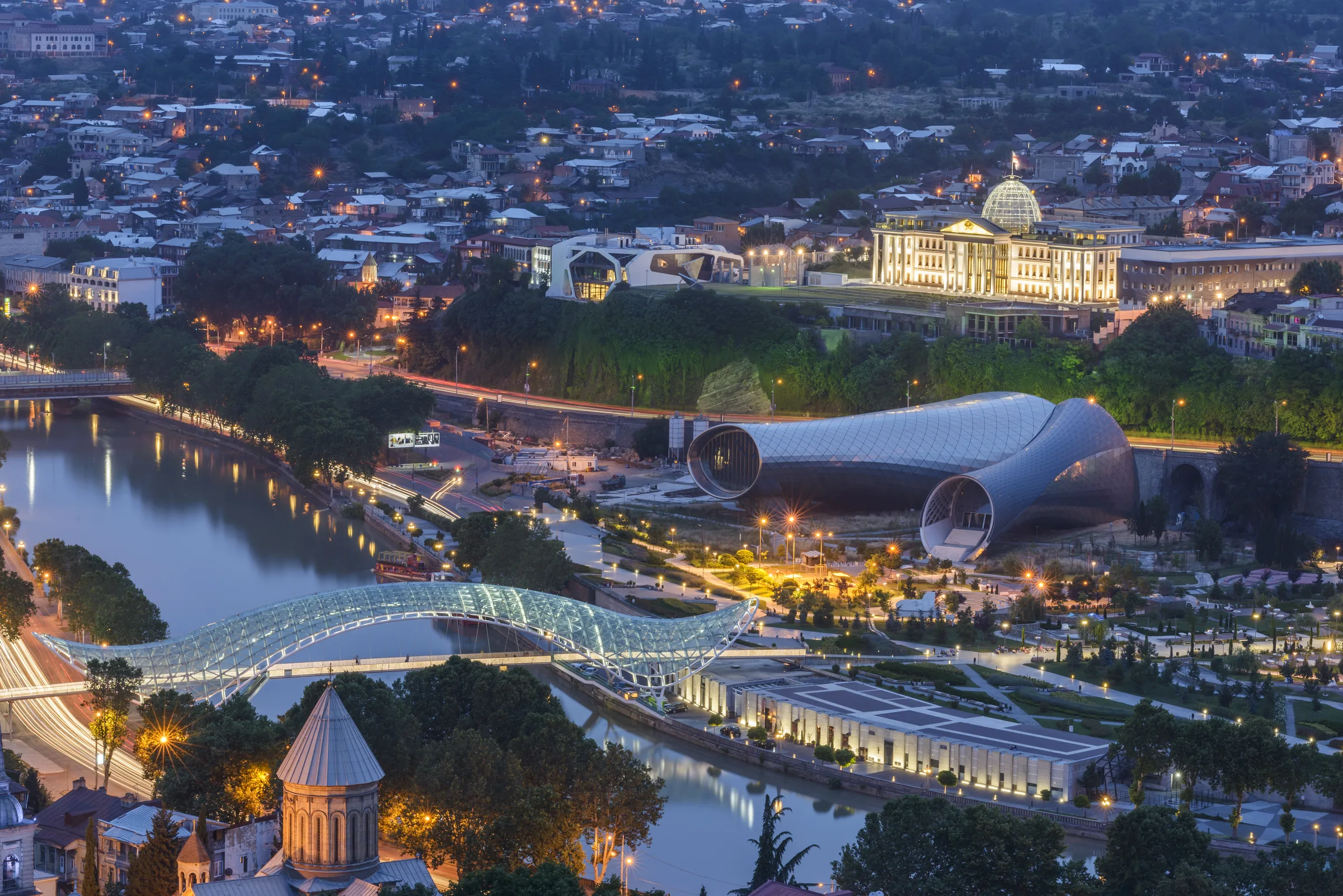
Tbilisi will surprise you. Not because it's "undiscovered" (it's not, anymore) or because it's "cheap" (it is, but that's not the point). It'll surprise you because it doesn't feel like anywhere else. The architecture is chaotic in the best way — crumbling Art Nouveau next to glass-and-steel modernism next to a medieval fortress. The food is absurdly good. The wine flows like water. And the people have a warmth that's hard to describe until you've experienced it.
Here's what I wish someone had told me before my first trip.
---Getting There
**Tbilisi International Airport (TBS)** is the main gateway. Direct flights from most European hubs — Istanbul, Vienna, Warsaw, Athens, Munich, Berlin, Paris. Low-cost carriers like Wizz Air and FlyDubai make it shockingly affordable.Quick Stats: Flying to Tbilisi
- Airport code: TBS (Tbilisi) or KUT (Kutaisi)
- Typical cost: €50–150 round trip from Europe
- Flight time: 3–5 hours from most European cities
- Airlines: Wizz Air, FlyDubai, Turkish Airlines, Lufthansa, LOT
💡 Pro tip: Get a Georgian SIM card at the airport. Magti or Beeline both have desks in arrivals. ~15 GEL ($5) for a SIM with 20GB+ data. You'll need it for Bolt, maps, and translation.
Where to Stay
Tbilisi's neighborhoods each have distinct vibes. Here's the honest version: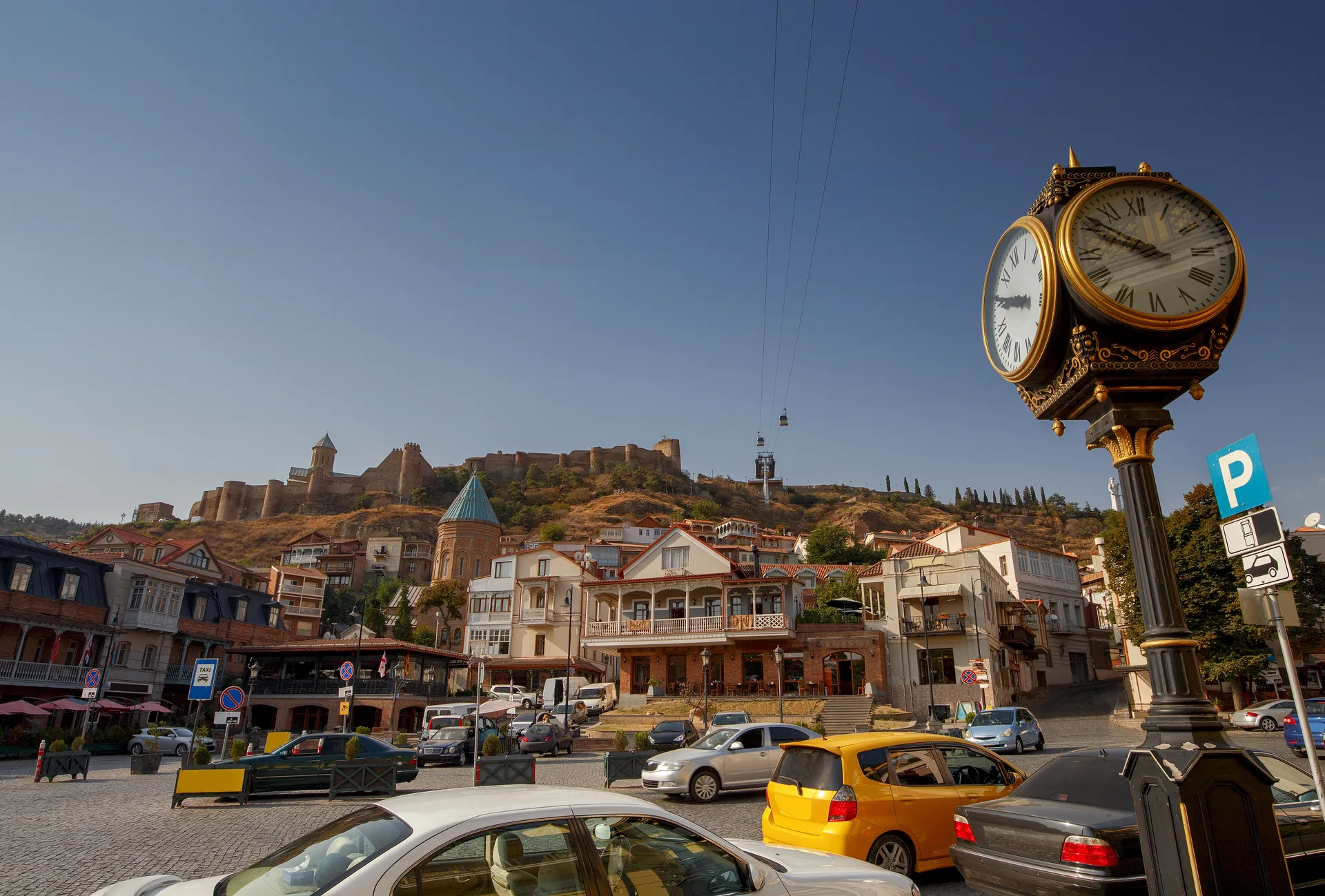 ### Old Town (best for first-timers)
Cobblestone streets, sulfur baths, churches, restaurants everywhere. You're walking distance to every major sight. The trade-off: it's the most touristy area and some buildings look like they might collapse (they won't, probably).
**Stay here if**: It's your first visit and you want to see everything on foot.
### Vera (my recommendation)
### Old Town (best for first-timers)
Cobblestone streets, sulfur baths, churches, restaurants everywhere. You're walking distance to every major sight. The trade-off: it's the most touristy area and some buildings look like they might collapse (they won't, probably).
**Stay here if**: It's your first visit and you want to see everything on foot.
### Vera (my recommendation)
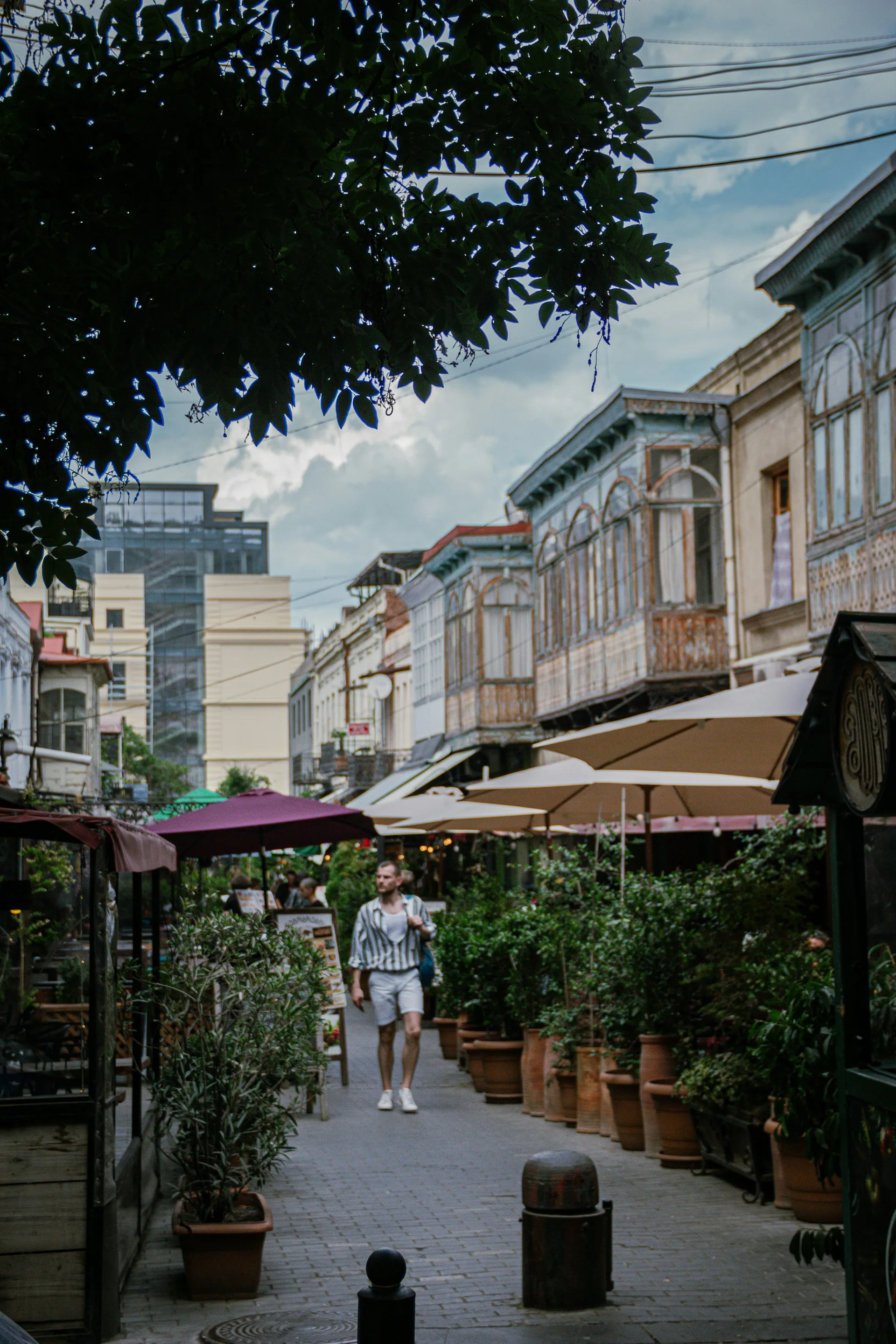 A 10-minute walk north of the old town. Quiet, leafy streets with colorful wooden balconies. Full of cute wine bars and cafés. Less touristy but still central. This is where Tbilisi locals actually hang out.
**Stay here if**: You want character without the tourist crowds.
### Vake (upscale, quiet)
Tree-lined boulevards, international restaurants, Vake Park. More residential and polished. This is where the embassies and expats are. It's removed from the old town action but very livable.
**Stay here if**: You prefer comfort over atmosphere.
### Marjanishvili (hip, emerging)
The "Brooklyn of Tbilisi" — gentrifying fast with art galleries, co-working spaces, and third-wave coffee. Raw and real. Great if you're a younger traveler or digital nomad.
**Stay here if**: You want to feel like you live here, not visit.
A 10-minute walk north of the old town. Quiet, leafy streets with colorful wooden balconies. Full of cute wine bars and cafés. Less touristy but still central. This is where Tbilisi locals actually hang out.
**Stay here if**: You want character without the tourist crowds.
### Vake (upscale, quiet)
Tree-lined boulevards, international restaurants, Vake Park. More residential and polished. This is where the embassies and expats are. It's removed from the old town action but very livable.
**Stay here if**: You prefer comfort over atmosphere.
### Marjanishvili (hip, emerging)
The "Brooklyn of Tbilisi" — gentrifying fast with art galleries, co-working spaces, and third-wave coffee. Raw and real. Great if you're a younger traveler or digital nomad.
**Stay here if**: You want to feel like you live here, not visit.
📊 Accommodation Prices (per night, Feb 2026)
| Type | Old Town | Vera/Vake |
|---|---|---|
| Hostel dorm | $8–15 | $10–18 |
| Guesthouse/B&B | $20–40 | $25–50 |
| 3-star hotel | $40–80 | $50–90 |
| 4-star hotel | $80–150 | $90–160 |
| Airbnb (1BR) | $25–60 | $30–70 |
Getting Around
Tbilisi is walkable in the center but sprawls out quickly. Here's what works: - **Bolt**: Your best friend. Rides across the city are $2-4. Clean cars, cashless payment, no negotiating. Use it constantly. - **Metro**: Two lines, modern stations, costs 1 GEL ($0.35). Get a MetroCard at any station — also works on buses. - **Walking**: The old town, Vera, and Rustaveli Avenue are all walkable. Wear comfortable shoes — the streets are steep and uneven. - **Cable cars**: The Rike Park to Narikala fortress cable car is great. Costs 2.5 GEL and gives you the best views of the city. **Don't bother with**: Renting a car in the city. Tbilisi traffic is aggressive and parking is a headache. Save the rental for mountain trips. ---What to See (and What to Skip)
### Don't Miss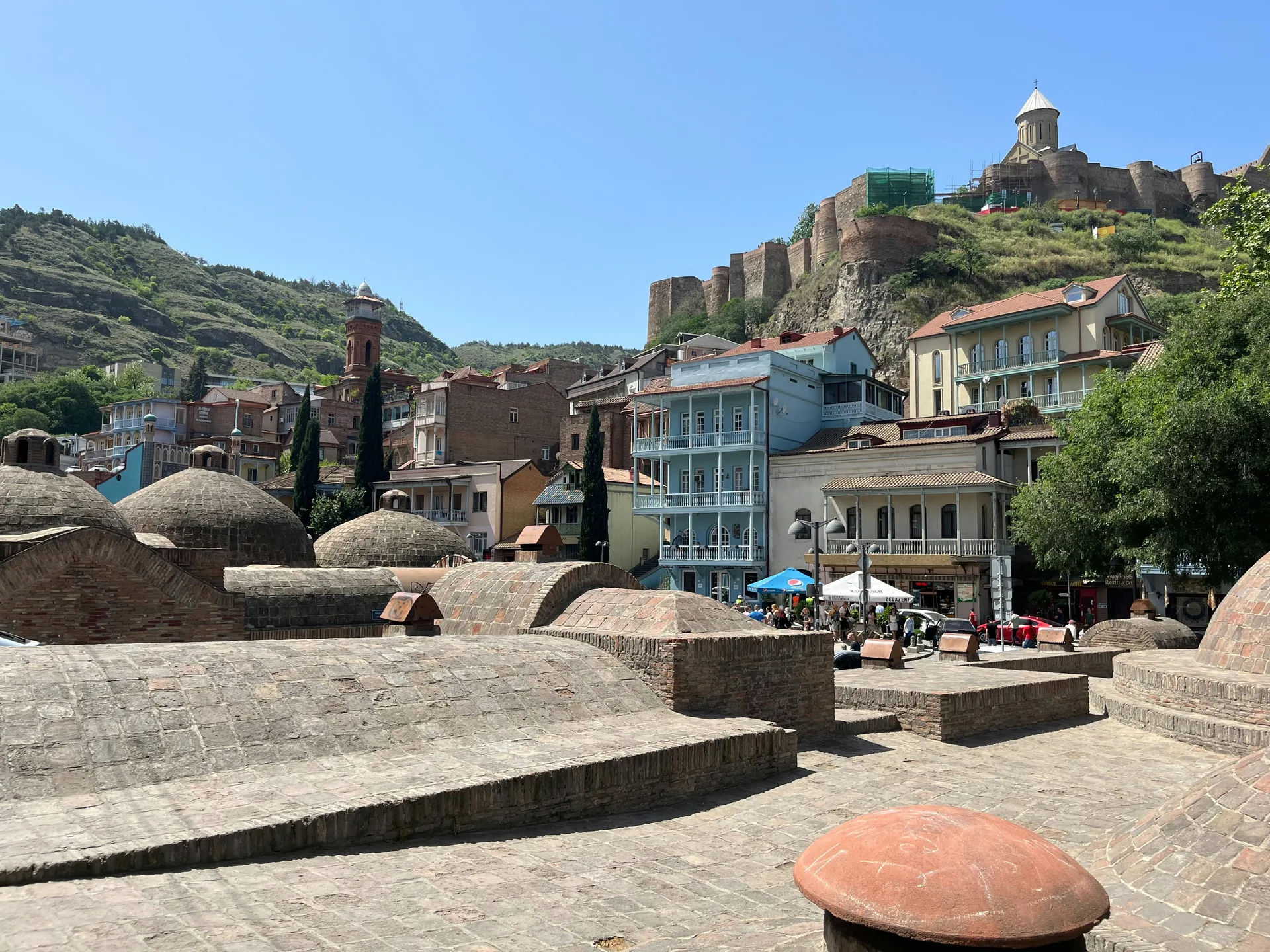 **Narikala Fortress** — Walk up (or take the cable car) for the best panoramic view of Tbilisi. The 4th-century fortress walls are impressive, and the view at sunset is worth the effort. Free.
**Abanotubani (Sulfur Baths)** — The reason Tbilisi exists (the name literally means "warm place"). Book a private room at Orbeliani Baths (the blue-tiled facade). 80-120 GEL for a private room with scrub. It's not a spa — it's a slightly funky, extremely relaxing sulfur bath. Go with it.
**Narikala Fortress** — Walk up (or take the cable car) for the best panoramic view of Tbilisi. The 4th-century fortress walls are impressive, and the view at sunset is worth the effort. Free.
**Abanotubani (Sulfur Baths)** — The reason Tbilisi exists (the name literally means "warm place"). Book a private room at Orbeliani Baths (the blue-tiled facade). 80-120 GEL for a private room with scrub. It's not a spa — it's a slightly funky, extremely relaxing sulfur bath. Go with it.
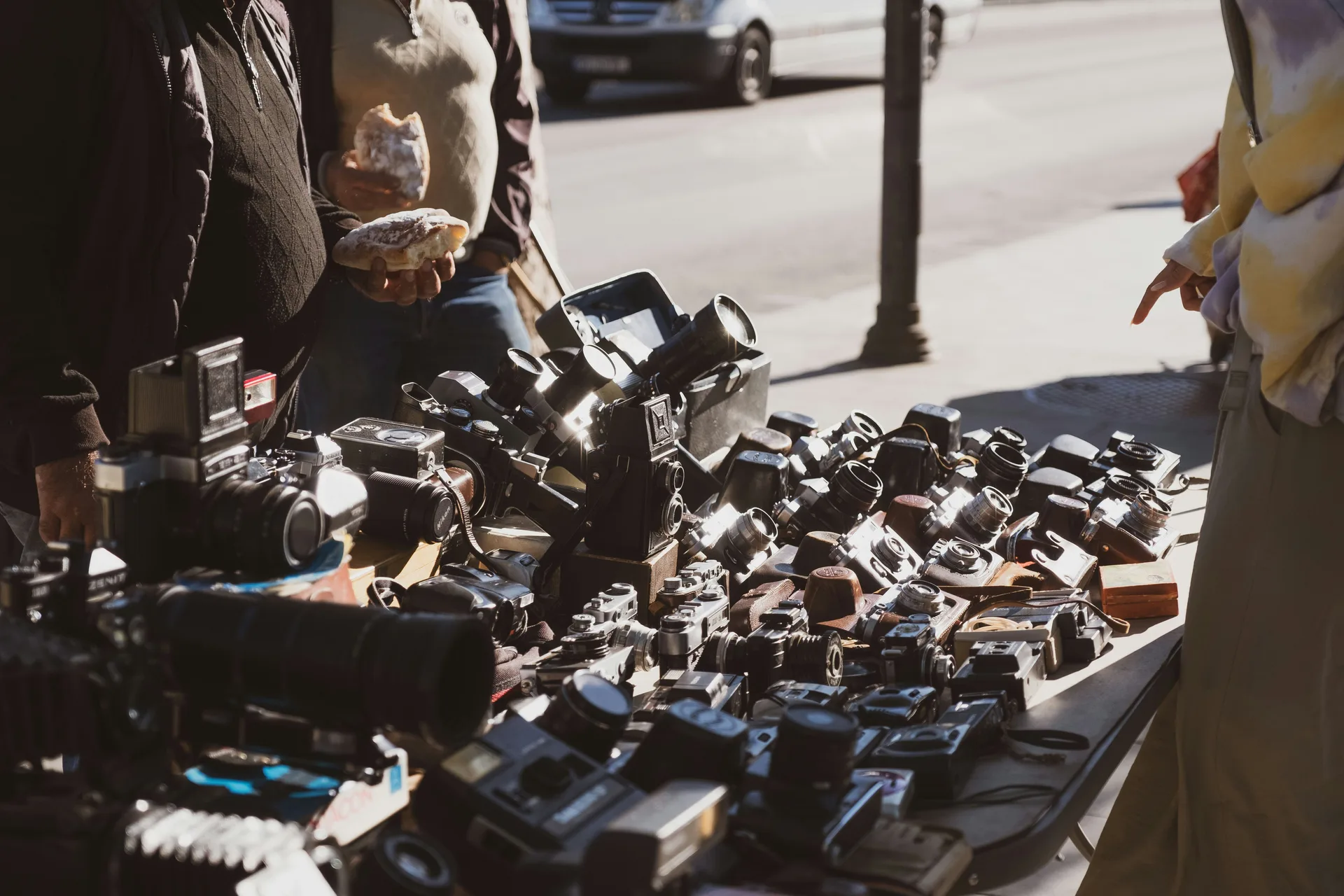 **Dry Bridge Market** — A sprawling open-air flea market selling Soviet memorabilia, paintings, antique jewelry, old cameras, and random junk. Saturday and Sunday mornings are best. Even if you buy nothing, it's fascinating.
**Rustaveli Avenue** — Tbilisi's main boulevard. Walk from Freedom Square to the Opera House. Stop at the National Gallery if you're interested in Pirosmani (Georgia's most famous painter — his naive style is genuinely charming).
**Fabrika** — A converted Soviet sewing factory turned hostel/co-working/restaurant/bar complex. Even if you don't stay here, come for a drink in the courtyard. It's where half the city's creative scene hangs out.
### You Can Skip
**Chronicles of Georgia (Stonehenge)** — The big pillars on the outskirts. They look cool in photos but getting there is a hassle and there's nothing else around. Worth a Bolt ride only if you have spare time.
**Turtle Lake** — Often recommended, rarely impressive. A small lake with a cable car ride. It's fine on a hot day but don't go out of your way.
**The Peace Bridge** — Walk across it (it's pretty at night, lit up), but don't make it a "thing." It's a bridge.
---
**Dry Bridge Market** — A sprawling open-air flea market selling Soviet memorabilia, paintings, antique jewelry, old cameras, and random junk. Saturday and Sunday mornings are best. Even if you buy nothing, it's fascinating.
**Rustaveli Avenue** — Tbilisi's main boulevard. Walk from Freedom Square to the Opera House. Stop at the National Gallery if you're interested in Pirosmani (Georgia's most famous painter — his naive style is genuinely charming).
**Fabrika** — A converted Soviet sewing factory turned hostel/co-working/restaurant/bar complex. Even if you don't stay here, come for a drink in the courtyard. It's where half the city's creative scene hangs out.
### You Can Skip
**Chronicles of Georgia (Stonehenge)** — The big pillars on the outskirts. They look cool in photos but getting there is a hassle and there's nothing else around. Worth a Bolt ride only if you have spare time.
**Turtle Lake** — Often recommended, rarely impressive. A small lake with a cable car ride. It's fine on a hot day but don't go out of your way.
**The Peace Bridge** — Walk across it (it's pretty at night, lit up), but don't make it a "thing." It's a bridge.
---
Where to Eat
Georgian food is one of the world's great cuisines. You genuinely cannot eat badly in Tbilisi. But here's how to eat *well*: ### The Essentials to TryKhachapuri
Cheese bread. Get the Adjarian style (boat-shaped with egg and butter). You'll understand the hype immediately.
Khinkali
Soup dumplings. Hold by the top, bite a hole, drink the broth, eat the meat. Don't eat the top knot — it's your counter.
Pkhali
Walnut-paste vegetable balls (spinach, beet, or green bean). Light, flavorful, and everywhere.
Mtsvadi
Grilled meat skewers. Simple but perfect with tkemali (plum sauce).
The Wine
> Georgia is the oldest wine-producing country on Earth — 8,000 years of continuous winemaking. The local style produces "amber" wines that are unlike anything you've had. Key things to know: - **Saperavi**: The main red grape. Bold, dark, slightly tannic. You'll like it. - **Rkatsiteli**: The main white grape. Often made in qvevri (clay vessel) style. - **Amber wine**: White wine fermented with its skins in qvevri. Looks orange, tastes complex. Try it even if you're a red-wine person. - **Wine is cheap**: A great bottle in a restaurant is $8-15. A great bottle at a shop is $5-10. **Wine bar pick**: Vino Underground on Tabidze Street — small, busy, pouring natural wines by the glass. The staff knows everything and will guide you.For a deep dive, read our Complete Guide to Georgian Wine on Georgian Eats.
---Money & Practical Tips
💰 Quick Reference
🗣️ Essential Georgian Phrases
The Stuff Nobody Tells You
**Dogs**: Tbilisi has many stray dogs. They're almost all vaccinated (check for ear tags) and friendly. They're basically the city's communal pets. Don't be alarmed. **Driving**: Georgians drive aggressively. As a pedestrian, don't assume cars will stop at crosswalks. They might. They might not. Make eye contact with drivers. **Internet**: Fast and reliable. Most cafés have WiFi. Mobile data is dirt cheap (see SIM card tip above). **Shopping**: Tbilisi is not a shopping destination. The real shopping is at markets — Deserter Market for food, Dry Bridge for antiques. ---How Many Days?
See the main sights, eat the essentials, fall in love. You'll leave wanting more.
Add Mtskheta (ancient capital) + Sighnaghi (wine country). The ideal first visit.
Add Kazbegi (mountains), slow down, repeat restaurants, feel like a local.